
Search Chautauqua County Court Records
The main online channel for Chautauqua County court records is the Kansas District Court Public Access Portal, also called CaseSearch. Kansas court records became available through the portal as district courts moved to Kansas eCourt centralized case management. Official state guidance describes the portal as a statewide public search for district court case information and documents when a record is open and available online.
CaseSearch is only one access route. The 14th Judicial District says public access terminals are available at each District Court office. For Chautauqua County, that means the Sedan office on the third floor of the courthouse. The same district FAQ says courts moved to electronic files on January 1, 2018, so public users view open file images at terminals instead of pulling a paper file. If the portal is sparse, the terminal and clerk request paths matter.
- Identify the court level before searching. Chautauqua County District Court handles district-level civil, criminal, domestic, probate, juvenile, small claims, and many traffic matters, while city municipal court matters are separate.
- Search CaseSearch by case number first when the number appears on a summons, citation, order, payment notice, or attorney filing.
- Use party name, business name, or citation search when no case number is known. Full legal names and spelling variants help avoid missed results.
- Use the 14th Judicial District calendar for hearing dates and daily docket questions. Calendar entries are not a full case file.
- Use the Sedan public terminal or the district public records request form when online results do not show images, copies, or enough case detail.
Kansas Supreme Court Rule 22 is the source the state records page points to for public electronic district and appellate case access. That rule helps explain why some Chautauqua County court records can be searched online while others require a clerk, a terminal, or a court order.
The Kansas court electronic access rule screenshot below is assigned to Chautauqua County court records because it is one of the state rules behind CaseSearch access.
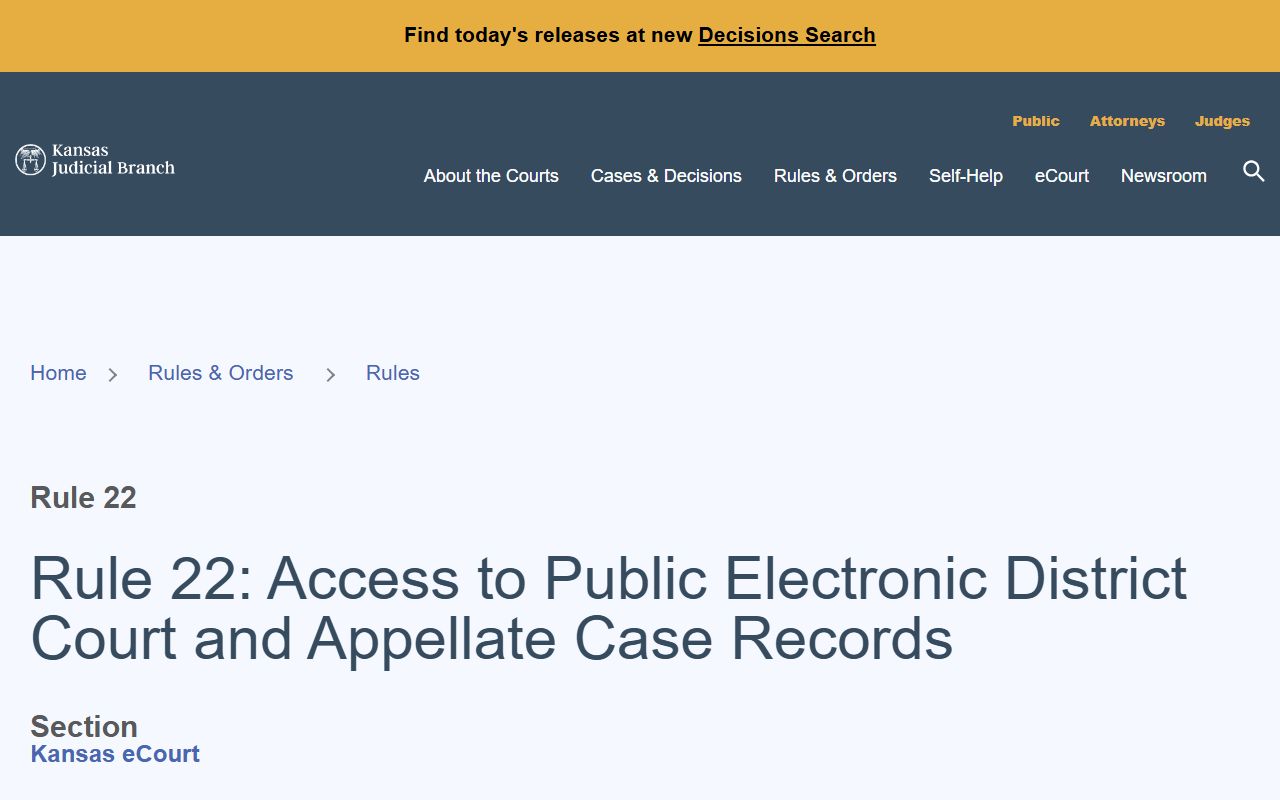
For local users, the rule matters most when a record appears in CaseSearch but the full image, confidential item, or certified copy still has to be handled by the clerk.
Chautauqua County Court Records Fields
The CaseSearch field list available in the research was partial because direct live portal inspection was blocked. The official snippets and state guidance still confirm the core search keys for Chautauqua County court records. Do not assume field order or hidden dropdowns beyond what the official sources identify.
| Field Label | Type | Required | Notes / Format |
|---|---|---|---|
| Case number | Text | Unspecified | Cleanest search key when copied from court-issued documents. |
| Party name | Text | Unspecified | Search by a person involved in a public case; try full legal names. |
| Business name | Text | Unspecified | Useful for limited actions, civil matters, and business-party records. |
| Citation | Text | Unspecified | Used for district court citation-related matters when the citation is in the state system. |
| Other role-based criteria | Role-based fields | Unspecified | Public users, attorneys, and registered users may see different available fields. |
The calendar has its own simpler search pattern. The 14th Judicial District calendar displays date-based hearing and docket events, with category filters visible in the calendar URL and entries such as criminal court docket events for the district. It is best for date and hearing checks, not full Chautauqua County court record review.
The Kansas Rule 106B page is another official source tied to public electronic district court record access.
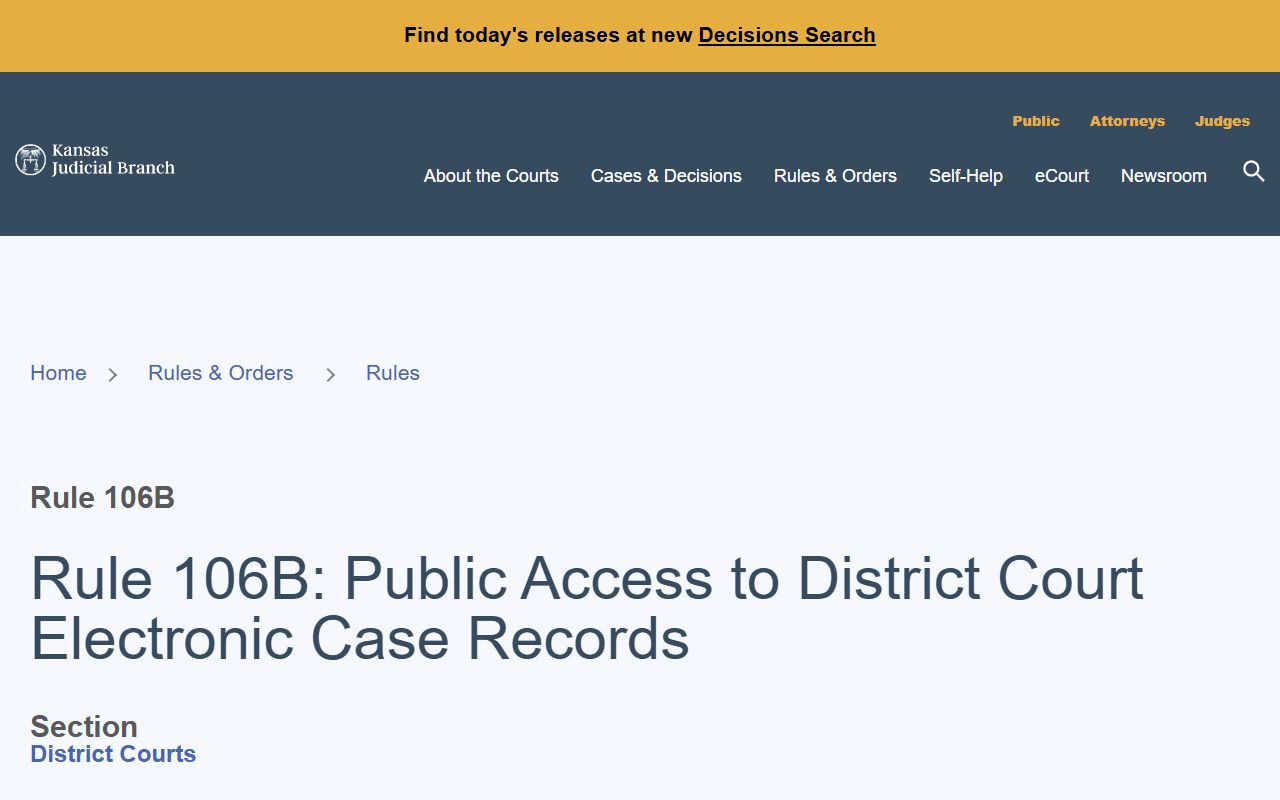
Rule-based access explains why Chautauqua County court record searches can show public case data while protected items are withheld, redacted, or available only through a controlled request.
Types of Chautauqua County Court Records
Chautauqua County is part of the Kansas 14th Judicial District. The 14th Judicial District describes the district as covering Chautauqua and Montgomery Counties, with courthouses in Sedan, Independence, and Coffeyville. District judges and the district magistrate judge hear civil, criminal, domestic, guardianship and conservatorship, juvenile, administration and probate, and small claims matters.
Record type matters because a searcher may need a different path for a docket date, a case image, a certified copy, or a payment. Chautauqua County District Court records are not the same as municipal court files, statewide driver records, KDHE vital certificates, KBI criminal history reports, or sheriff booking records.
- Civil records include Chapter 60 cases, limited actions, small claims, garnishments, judgments, liens, tax warrants, and property disputes.
- Criminal court records include filed charges, pleas, bonds, dispositions, sentences, restitution, warrant activity, and expungement filings.
- Domestic and family records include divorce and post-decree matters, with possible privacy limits for children, addresses, and financial data.
- Probate records include wills, estate matters, guardianship, conservatorship, determinations of descent, and related District Court filings.
- Traffic records may be district court citations or municipal court matters, so the issuing court must be checked before payment or search.
The Kansas Open Records Act chapter index is assigned to Chautauqua County court records because it supplies the state open-records backdrop for public access.
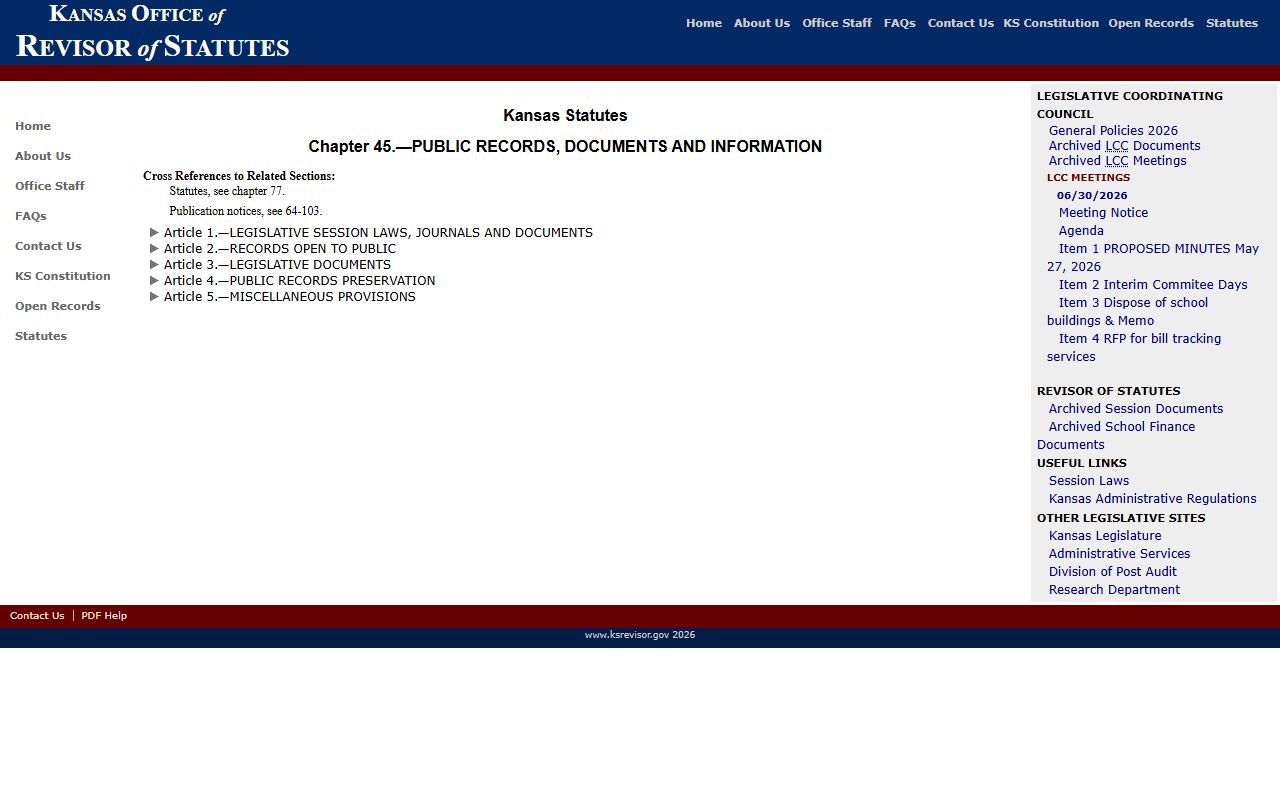
Kansas open-records law supports inspection of public agency records, but court case files also follow Kansas Supreme Court rules and record-specific confidentiality laws.
What Chautauqua County Court Records Show
A Chautauqua County court record may show the case number, party names, attorney information, filed documents, the next hearing date, docket events, financial balances, bonds, judgments, restitution, and public electronic images. The civil FAQ says the court may provide attorney or law firm contact information on a case, but the court is prohibited from releasing personal addresses and telephone numbers.
Because no official sample Chautauqua County case record was viewable without interactive portal access, the field inventory below uses only the fields supported by Kansas court record practices and the local FAQ. It should be read as a practical inventory, not a promise that every record type shows every field.
| Field | What It Shows |
|---|---|
| Case number | The unique court identifier used by CaseSearch, clerk staff, payment systems, and docket notices. |
| Party names | Plaintiff and defendant, petitioner and respondent, state and defendant, estate names, or business parties. |
| Filed documents | Complaints, petitions, motions, orders, judgments, pleas, probate filings, or other documents filed with the clerk. |
| Next hearing date | The next setting when the case is public, not sealed, and the caller has enough case information. |
| Docket entries | Chronological activity such as filings, hearings, orders, payments, warrants, and dispositions. |
| Financial fields | Docket fees, court costs, fines, restitution, judgments, bonds, payment status, or collection referral data. |
| Electronic images | Public images of open electronic files available on public terminals for records after electronic filing began. |
| Redactions | Items withheld or masked because of sealed status, juvenile law, privacy rules, or personal data restrictions. |
Chautauqua County Court Records Access
Public access in Chautauqua County starts with Kansas open-records policy and court-specific electronic access rules. K.S.A. 45-216 states the public policy for open records, while K.S.A. 45-218 addresses inspection of public records unless another law provides otherwise. K.S.A. 45-219 allows fees for copies and inspection services.
K.S.A. 45-221 lists records that are not required to be disclosed. For Chautauqua County court records, that statute works alongside Kansas Supreme Court Rule 22 and Rule 106B. A public court case can still have confidential filings, redacted details, restricted images, or sealed portions.
Note: Public access does not mean every image, address, juvenile matter, or sealed filing is open online.
The K.S.A. 45-221 source page shown below is part of the record-access framework for restricted Chautauqua County court records.
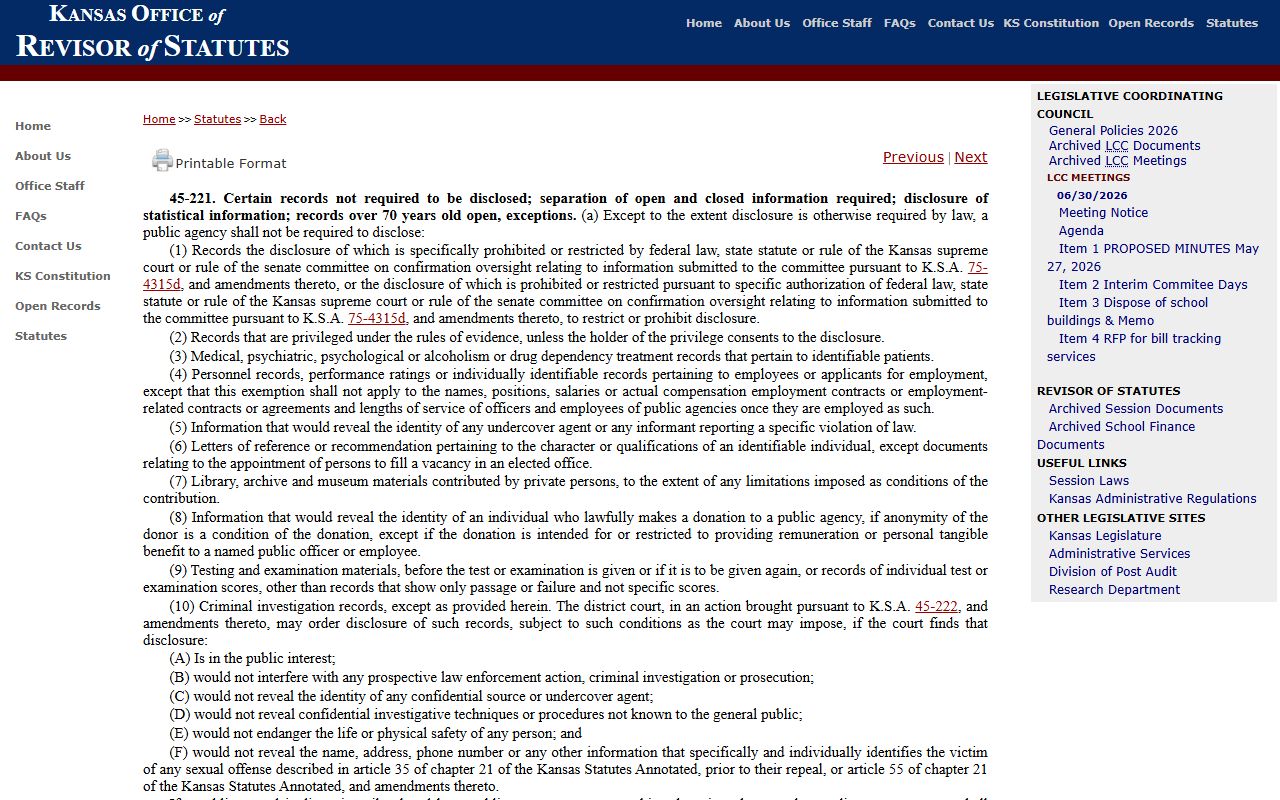
That exception list is the reason records involving privacy, investigations, personnel matters, and protected information may not appear through the same path as ordinary case entries.
Restricted Chautauqua County Court Records
Restricted Chautauqua County court records include juvenile matters, sealed or expunged criminal files, adoption records, certain care and treatment records, mental health matters, protected-person information, domestic and protection-order details, and filings containing protected personal information. Restrictions may come from statute, Supreme Court rule, court order, or redaction practice.
K.S.A. 38-2309 governs juvenile court official files and disclosure. That rule is especially important because juvenile District Court matters are not treated like ordinary adult civil or criminal case records. Kansas expungement law, including K.S.A. 21-6614, can also limit public access after a court grants relief.
The juvenile records statute screenshot is assigned here because juvenile confidentiality is a core limit on Chautauqua County court records.
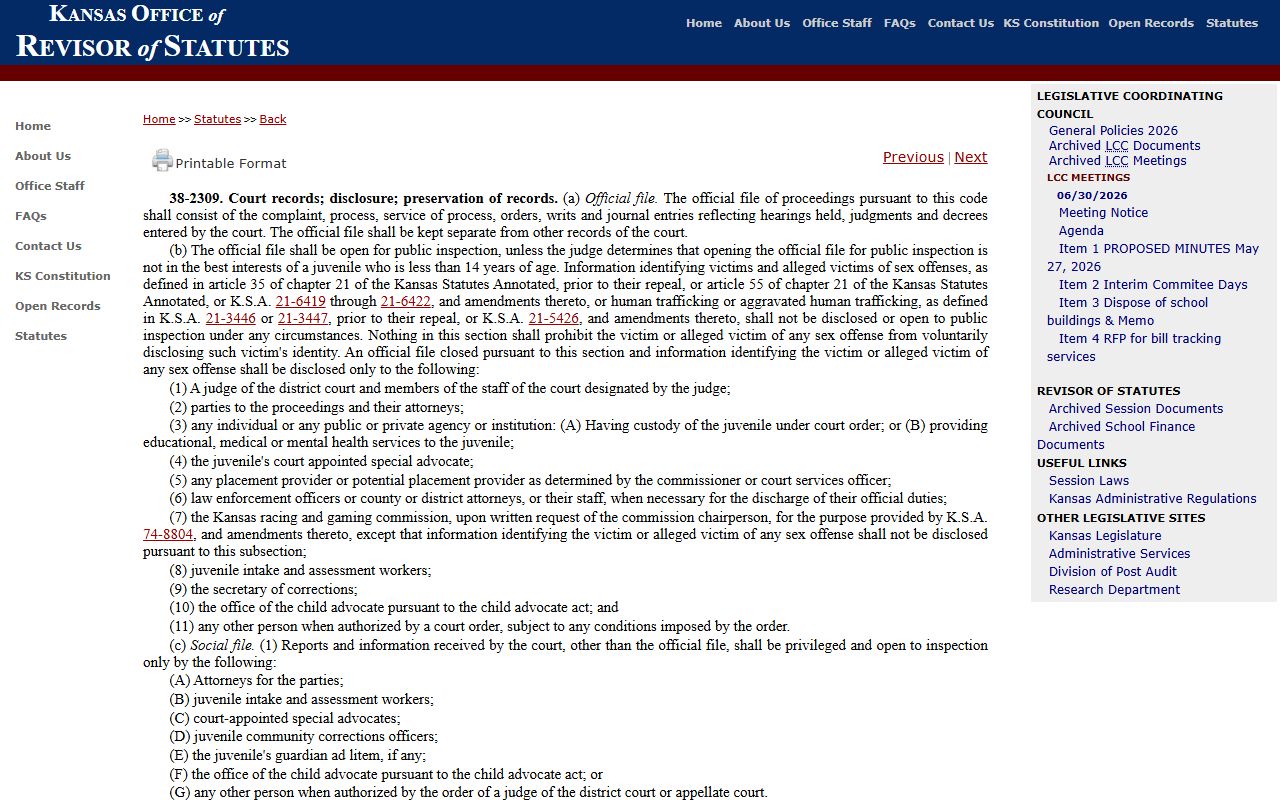
When a juvenile, sealed, adoption, or protected filing is involved, the clerk may confirm only what the law permits and may direct the requester to a formal motion or court order.
Chautauqua County Court Records Requests
The official fallback for Chautauqua County court records is direct clerk access. The 14th Judicial District public records request form is a suggested tool, and the form notes that requests may be made in any legible format. It asks for the request date, requester name, address, city, state and ZIP code, email or phone number, description of the requested record, and signature information.
The form lists a district mailing route through Montgomery County District Court in Independence, but Chautauqua County has its local court office in Sedan. For local file inspection, public terminal access, copies, and routing questions, contact the Sedan Clerk of the District Court. The district also accepts faxed request materials, and the Sedan office has its own fax number.
Chautauqua County Clerk of the District Court
215 North Chautauqua, 3rd Floor
Sedan, KS 67361
620-725-5870
Monday-Friday, 8:00 a.m.-12:00 noon and 1:00 p.m.-4:00 p.m.
Copy and filing fees depend on the record type and service requested. The 14th Judicial District fee chart includes totals for civil, domestic, limited action, small claims, criminal, traffic, juvenile, probate, marriage license, municipal appeal, and appellate filings. Do not assume a certified copy is free just because a search result appears online.
The Kansas expungement statute index image below rounds out the Chautauqua County court records access discussion because expungement changes what the public can see.
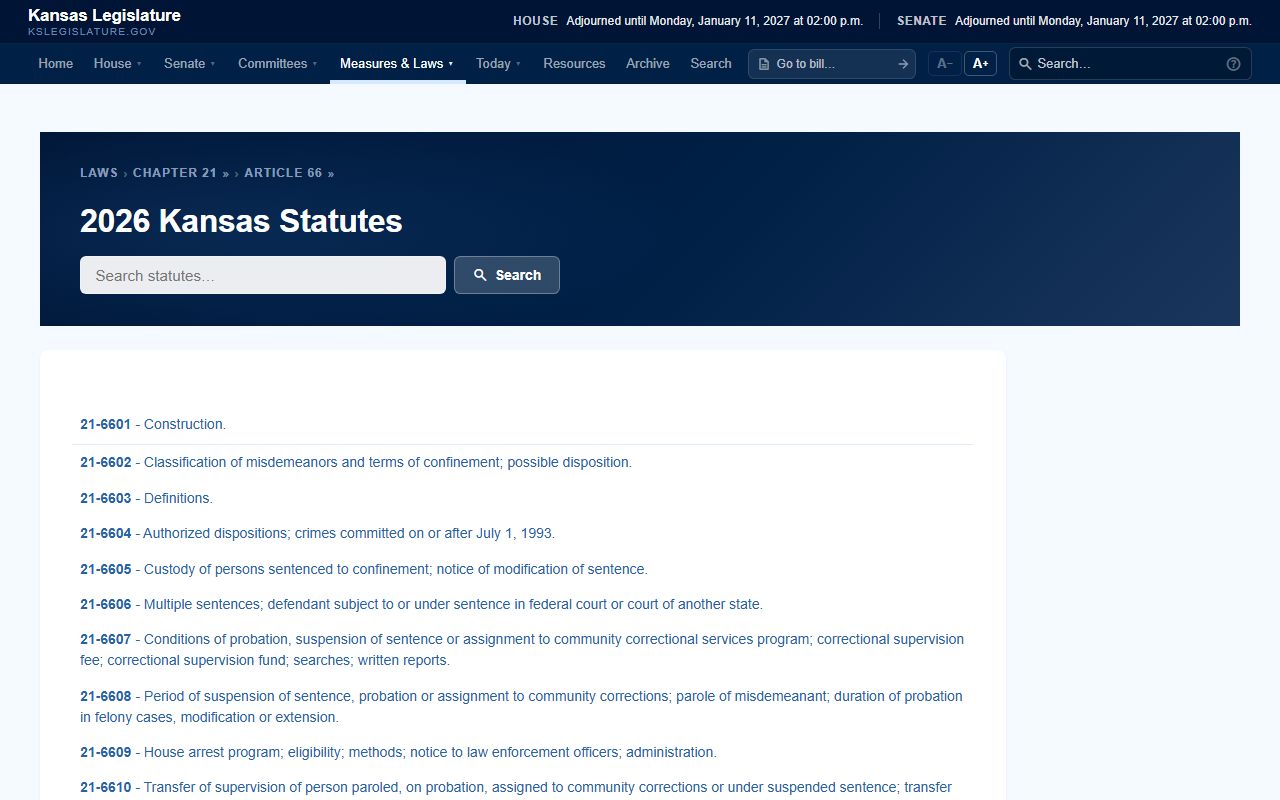
Expungement does not replace the ordinary records request path, but it can explain why an older arrest, diversion, or conviction no longer appears in public court results.